





A Guide to Plastic in Tea Bags and How to Identify Truly Plastic-Free Alternatives

Do Tea Bags Release Microplastics?
The Research, the Risks, and How to Choose a Safer Cup
Tea is supposed to be simple — leaves, hot water and a quiet moment. But your ritual should be infused with calm and enjoyment, not worry about what's leaching into your cup. Microplastics have been making headlines lately, and tea drinkers have good reason to pay attention. The culprit isn't the tea itself; it's the bag it comes in. In this article, we'll walk you through what the research says, which tea bags are problematic and which aren't, what the health implications may be, and how to make smarter choices at the grocery store — without giving up your daily ritual.
What are Microplastics, Exactly?
Think of microplastics as plastic's ghost — fragments so small you can't see them, yet present almost everywhere plastic exists. Their size ranges from 100 nanometres to 5 millimeters; nanoplastics are even smaller. For context, a human hair is roughly 70,000 nanometres wide.
Plastic doesn't biodegrade like organic materials do — it fragments, breaking down into progressively smaller pieces over time. A plastic bag in the ocean, a synthetic fiber in your laundry, a plastic tea bag in boiling water — each can shed particles into its surroundings. In the context of tea bags, heat accelerates plastic degradation. Meaning that when you pour boiling water over a plastic tea bag, thermal stress causes the material to shed micro- and nanoplastic particles directly into your beverage.
Seminal Studies on Microplastics in Tea Bags:
There are several studies that test a variety of tea bag materials and measure their release of microplastics. In 2019, McGill University in Montreal, Canada published a study in the journal Environmental Science & Technology. Their findings were striking: steeping a single plastic tea bag at brewing temperature (95°C) releases approximately 11.6 billion microplastics and 3.1 billion nanoplastics into a single cup of tea.
The particles they identified were nylon and polyethylene terephthalate (PET) — matching the materials of the bags themselves. To put the number in perspective: salt has also been found to contain microplastics, but a plastic bag with tea contains thousands of times more plastic than salt.
A December 2024 study from Spain's Autonomous University of Barcelona was the first study to show that these particles are actually absorbed by human intestinal cells — meaning they can enter the bloodstream and travel throughout the body.
Health Risks of Microplastics: What We Know and What We Don’t
There are several studies examining the health implications of microplastics. The research is active and evolving — and while the findings are significant, there's a lot we still don't know about long-term human exposure. Here is what current evidence suggests:
-
Inflammation and Immune Disruption
-
Oxidative Stress and DNA Damage
-
Endocrine Disruption
-
Cardiovascular Findings
-
Reproductive and Developmental Concerns
Understanding Types of Tea Bags and Which are Safe
Not all tea bags are created equal. Whether your daily cup poses a real plastic in tea bags concern depends almost entirely on the material. Here's a plain-language breakdown of what's actually in your bag.
-
Polypropylene (PP) — The Worst Offender Releases ~1.2 billion plastic particles/mL. Found in pyramid bags and hidden in the seams of many paper bags. It is also used as a heat-sealing agent hidden along the seams of traditional-looking paper bags.
-
Nylon (Polyamide / Nylon-6) — “Silky” Pyramid Bags Releases 8.18 million particles/mL. Particle size also grows 1.5–2x larger with extended soaking.
-
PET (Polyethylene Terephthalate) — The Original Plastic Bag. The same plastic as disposable water bottles. Releases both microplastics and chemical byproducts from manufacturing.
-
Cellulose (Paper Bags) — Safer, But Check the Label Releases ~135 million particles/mL. The paper may be natural, but the seal is typically PP plastic — and many contain epichlorohydrin, a probable human carcinogen.
-
PLA (Polylactic Acid / "Bioplastics") — The Gray Area. Typically derived from corn starch or sugarcane and marketed as eco-friendly. It’s worth noting that many PLA-based tea bags are made from genetically modified corn starch. "Plant-based" doesn't mean particle-free. Long-term health research is still pending.
-
Manila Hemp (Abacá) — The Gold Standard. The most documented plastic-free option available. Naturally water-resistant with no plastic content, Abacá is a plant from the banana family, grown primarily in the Philippines, and it produces a strong, naturally water-resistant fiber.
Note: Most tea bags use a wet-strength agent to survive boiling water. The mainstream option (PAE) contains epichlorohydrin — a probable carcinogen. The cleaner alternative (PAA) is food-grade, water-soluble and FDA/EU compliant.
A Closer Look At Numis Tea Bag Breakdown
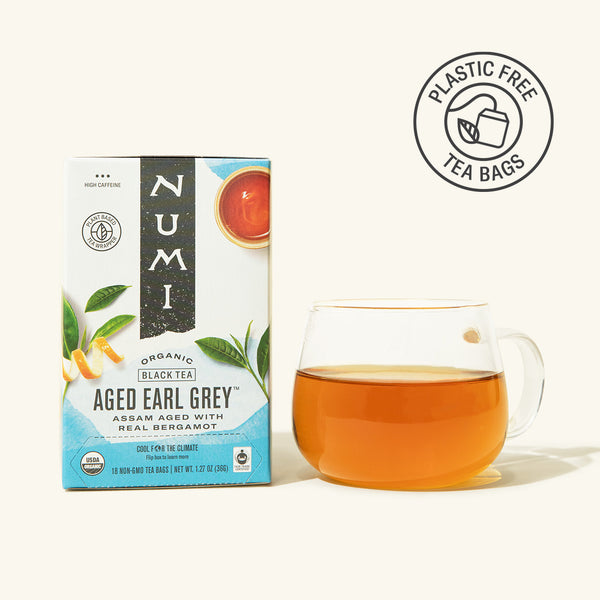
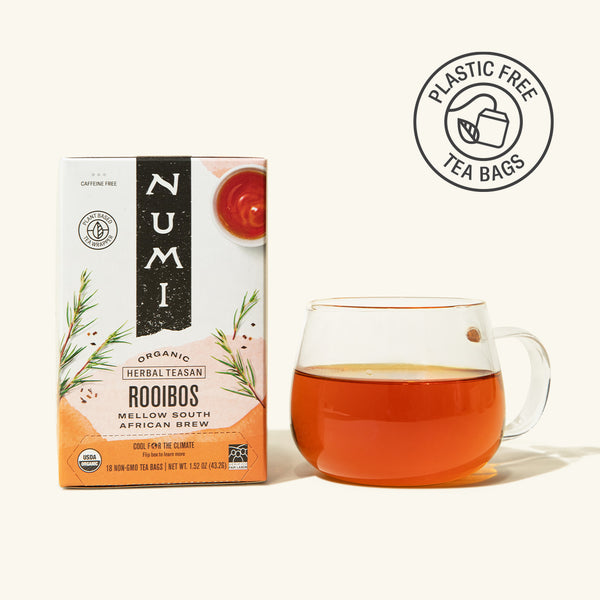
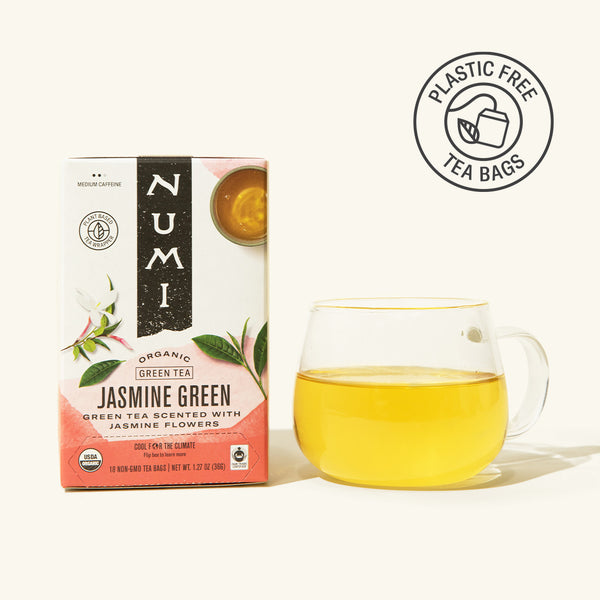
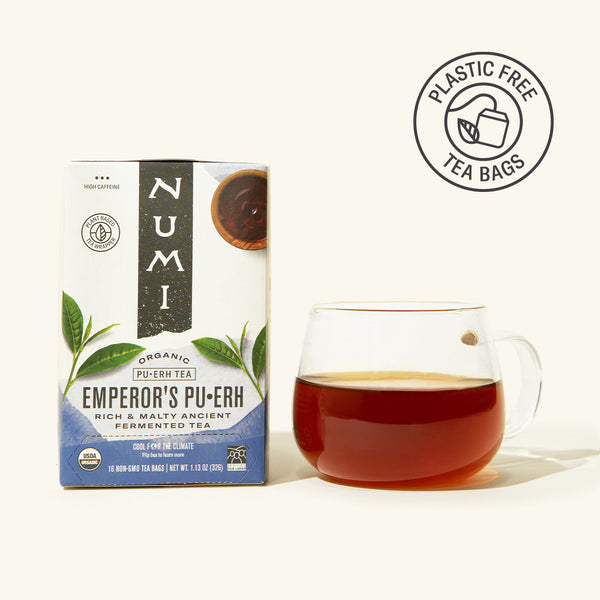
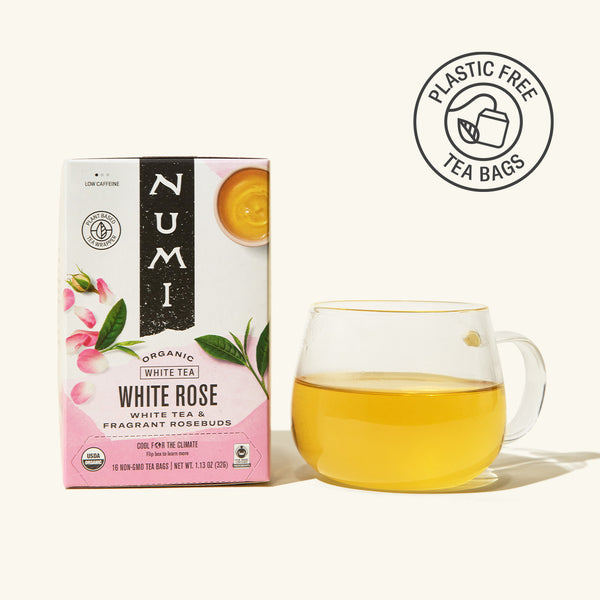
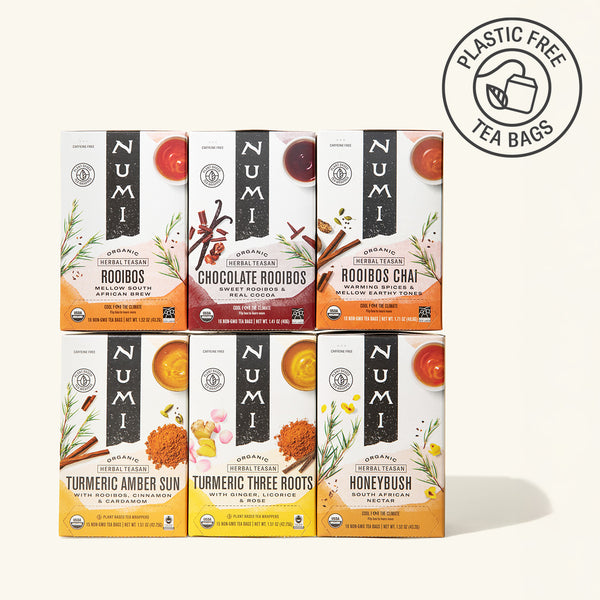
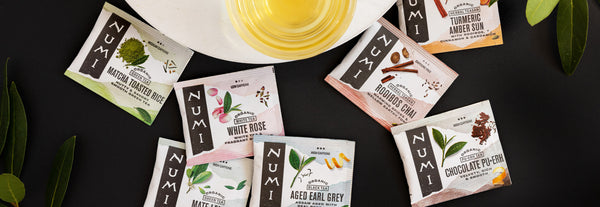
Numi is one of the most thoroughly documented examples of a genuinely plastic-free tea bag.
The bag material itself is made from:
-
Manila hemp (Abacá) fiber
-
Softwood fiber
-
food-grade PAA
The sealing method: Numi's tea bags are non-heat-sealed. Instead, they use a crimp and knot process — entirely eliminating the need for polypropylene as a heat-sealing agent. The string is 100% cotton, sewn with a knot. The tag is 100% recycled paper with soy-based inks.
Third-party certifications:
-
BPI Certified Biodegradable (Biodegradable Products Institute) certifies there are no fluorinated chemicals added to the material; and they are biodegradable and compostable. They are free of PFAS (“forever chemicals”).
-
Supplier certification specifically confirming no plastics or microplastics are added during manufacturing — not a marketing claim, but a documented supplier verification.
How to Find the Best Plastic-Free Tea Bags
So what should you actually do? The good news is that you have real options — and finding them is easier than it used to be.
Option 1: Loose Leaf
The most reliably plastic-free brewing method is loose-leaf tea steeped in a stainless steel infuser. No bag, no seal, no hidden additives. If you haven't made the switch, it's worth trying — and the flavor is often noticeably better.
Option 2: Truly Plastic-Free Tea Bags
If you prefer the convenience of bags, look for brands that:
-
Use abaca fiber (Manila hemp), unbleached paper, or wood pulp as the bag material
-
Seal with cotton stitching, crimping, or ultrasonic bonding — not heat-sealing (which typically requires polypropylene)
-
Have third-party certifications backing their plastic-free claims, not just marketing language
-
Are transparent about whether their bag contains any wet-strength agents — and what those agents are
What Labels to Look For
-
BPI Certified (Biodegradable Products Institute) — certifies the product is biodegradable, chemical-free, and free of plastic substances and PFAS ("forever chemicals")
-
Non-GMO Project Verified — relevant if the bag material is plant-based/made out of a corn or sugar base
-
Unbleached / oxygen-bleached — avoids chlorine bleach residues
-
No polypropylene, nylon, or PET — explicitly listed by the brand
Be cautious of "compostable" as a standalone claim. It doesn't mean plastic-free. Look for brands that are transparent, certified, and specific — not just ones that use the word "natural."